
Curiosity fuels discovery, and few pathways spark deeper curiosity than the skies above and the intelligent systems we build on Earth. Whether charting exoplanets, decoding attention and memory, or orchestrating teams of autonomous robots, students can tackle research that is both rigorous and thrilling. The following sections present richly detailed project ideas and frameworks across astronomy, cognitive science, and robotics, showing how high school and early undergraduate learners can move from inspiration to publication-ready investigations. Each topic blends accessible tools with professional methods, opening doors to authentic inquiry, data-driven reasoning, and portfolio-worthy outcomes.
Astronomy Research Ideas and Space Telescope Projects for Young Investigators
Modern astronomy is powered by open data. Students can mine professional archives to produce original results—no observatory required. For instance, astronomy research ideas centered on exoplanet detection can leverage Transiting Exoplanet Survey Satellite (TESS) light curves to search for periodic dips that indicate planetary transits. After downloading time-series data, students can clean it, remove systematics using detrending, and apply period-finding algorithms (Lomb–Scargle or Box Least Squares). Promising candidates can be vetted by checking signal-to-noise, transit depth and duration, and consistency across sectors. Even null results teach valuable lessons about noise characterization, stellar variability, and detection thresholds.
Beyond exoplanets, students can tackle variable stars, supernova classification, or asteroid occultation predictions. A DSLR on a tripod can produce scientifically useful photometry for bright variables when paired with calibration frames (bias, dark, flat) and processed in software such as AstroImageJ. For more advanced optical spectroscopy, a low-cost diffraction grating and a modest telescope let learners capture stellar spectra, measure Balmer lines, and infer stellar temperature and composition. These hands-on builds can be complemented by archival analyses—from Sloan Digital Sky Survey (SDSS) galaxy spectra to Gaia astrometry—creating projects that bridge instrumentation, observation, and data science.
Public archives make Space Telescope Projects approachable. The Mikulski Archive for Space Telescopes (MAST) hosts Hubble and TESS data, while the Barbara A. Mikulski Archive includes ultraviolet to near-infrared datasets suitable for multiwavelength studies. Students might compare Hubble morphology with ground-based detections, test star-formation indicators across filters, or explore gravitational lens candidates by visually screening image cutouts before applying automated classification. Cross-matching catalogs—e.g., Pan-STARRS photometry with Gaia parallaxes—enables color–magnitude analyses and stellar population studies that mirror professional astrophysics workflows.
Case study-style projects help structure effort and evaluation. One compelling pathway is a two-part investigation: first, identify a variable star using archival light curves; second, design a follow-up campaign with a school or community telescope to refine the period and amplitude. Milestones include a literature review, a reproducible processing notebook (Python/Astropy), uncertainty propagation, and a short report formatted like a research note. By emphasizing reproducibility and clear visualization, students gain experience aligned with peer-reviewed standards—and, when results are novel, can contribute to citizen-science databases or small journals.
Cognitive Science for High School: Experiments that Connect Brain, Behavior, and Data
Hands-on cognitive science thrives on careful experimental design, ethical data collection, and statistical rigor. At the entry level, learners can investigate reaction-time phenomena like the Stroop effect, attentional blink, or change blindness using open-source platforms such as PsychoPy, psiturk, or jsPsych. These tools enable browser-based tasks with randomized trials, counterbalancing, and automatic data recording. Students can pre-register hypotheses (e.g., interference will slow congruent vs. incongruent trials), then analyze results with t-tests or simple ANOVAs, reporting effect sizes and confidence intervals to demonstrate practical significance.
Sensory psychophysics offers another fertile domain. Projects might measure just-noticeable differences (JNDs) for brightness or pitch using adaptive staircases, or derive psychometric functions from forced-choice trials. With smartphone lux meters or tone generators, students can create controlled stimuli and fit logistic curves to characterize perceptual thresholds. They can also explore memory and sleep by testing recall intervals across groups, addressing confounds with randomized assignment and blinding wherever feasible. Even simple studies become powerful when they include robust sample sizes, preregistration, and transparent data practices.
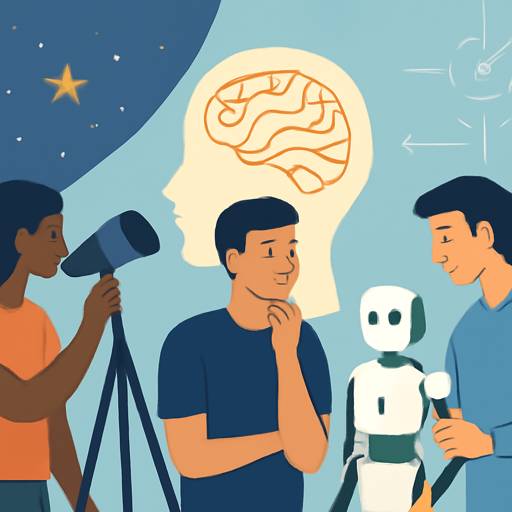
Advanced cognitive science for high school projects can incorporate computational modeling. For decision-making tasks, the drift-diffusion model (DDM) connects accuracy and reaction time by estimating latent parameters like evidence accumulation rate and boundary separation. Students can simulate datasets, fit models with open libraries, and compare goodness-of-fit across competing hypotheses. In visual cognition, saliency models and convolutional neural networks let learners predict fixation hotspots on complex scenes, then evaluate model-to-human agreement using correlation or information-theoretic measures. Even without specialized hardware, webcam-based gaze estimation (e.g., WebGazer) provides approximate eye-tracking for exploratory work.
Ethics and replicability must guide every study. Students should draft consent language in plain terms, anonymize datasets, and avoid sensitive measures without institutional oversight. Pre-analysis plans help curb p-hacking, while power analyses ensure the study can detect anticipated effects. To enrich learning, teams can run a micro-replication—testing a classic effect alongside their novel question—and compare outcomes to the literature. This approach teaches the value of negative results, careful interpretation, and theory refinement, forming a professional mindset that translates to neuroscience, psychology, human–computer interaction, and data science.
Humanoid and Swarm Robotics: Building Intelligent Movement and Collective Problem-Solving
Robotics projects scale beautifully from single-agent control to emergent collective intelligence. For humanoid robotics for students, consider a biped with 10–12 degrees of freedom powered by micro servos. Begin with mechanical design: lightweight 3D-printed limbs, core bracing to minimize torsion, and accessible fasteners for maintenance. Integrate an IMU for balance, then implement forward and inverse kinematics to map target foot positions into joint angles. Students can prototype open-loop gaits (e.g., zero moment point approximations) before layering on feedback control for stability. A microcontroller like an ESP32 handles low-level timing, while a Raspberry Pi or single-board computer runs higher-level behaviors and computer vision.
Perception and planning elevate capability. With OpenCV, learners can implement color-based tracking, AprilTag localization, or monocular depth heuristics. For manipulation, a compliant gripper using flexible materials prevents damage and tolerates positioning error. Simulation in PyBullet or Gazebo accelerates iteration and allows reinforcement learning experiments to shape stable walking or reaching policies before deployment. Students document model transfer gaps—why a gait that succeeds in simulation may fail on hardware—and propose calibration routines to reduce discrepancies, sharpening both their engineering and scientific thinking.
Collective autonomy introduces coordination, resilience, and scalability. In Swarm robotics student projects, teams can build a fleet of micro-rovers with differential drive, low-cost range sensors, and Bluetooth Low Energy or Zigbee radios. Algorithmic building blocks include flocking (Reynolds’ rules), formation-keeping via consensus, and foraging with finite-state machines. Decentralized control—where each robot makes local decisions from limited sensing—encourages robustness against single-point failures. Students can benchmark performance with metrics like coverage percentage, mean time to target acquisition, collision rate, and energy consumption per task cycle.
Case studies illuminate the journey from concept to demo. One team might field ten palm-sized robots that cooperatively map a classroom using occupancy grids and frontier exploration. Each agent shares compressed observations and maintains a local pose estimate via dead reckoning augmented by occasional visual landmarks. When communication drops, robots continue with conservative behaviors, then reconcile maps upon reconnection. Another project could deploy a small humanoid that gestures and speaks to guide the swarm, fusing human-robot interaction with distributed autonomy. Safety protocols—emergency stop, throttle-limited velocities, and soft bumpers—make lab trials predictable, while reproducible code repositories and experiment logs build credibility for science fairs, grant applications, and undergraduate admissions.
Cross-disciplinary depth sets these robotics efforts apart. Mechanical students can lead design-for-manufacture, coders can implement SLAM or gait control, and data analysts can formalize hypotheses and analyze performance with statistical rigor. By treating systems as testable scientific instruments, teams turn demos into publishable engineering studies, advancing skills that align with both academic research and industry prototyping.
