
When a patient can bear partial weight but lacks the strength or balance to rise independently, the power sit to stand lift becomes an essential bridge between immobility and functional independence. These devices are not simply motorized chairs; they represent a sophisticated fusion of biomechanics, safety engineering, and patient-centered design. For caregivers in hospitals, skilled nursing facilities, and home care, understanding how these lifts operate—and why they differ from full-body sling lifts—can dramatically improve transfer outcomes and reduce injury risks.
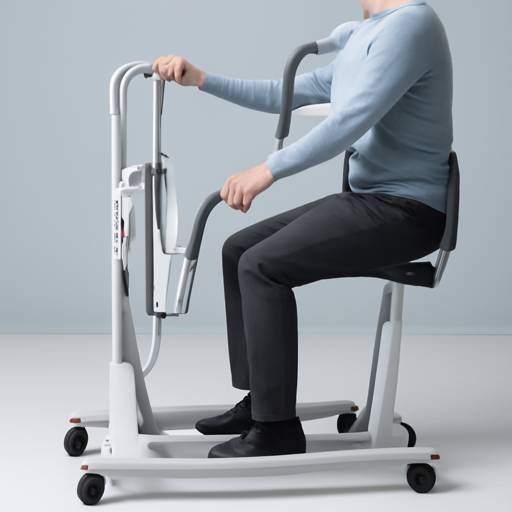
At its core, a power sit to stand lift uses a battery-powered actuator to gradually raise a patient from a seated position into a near-standing posture. Unlike manual sit-to-stand lifts that require the caregiver to crank a handle, powered models offer smooth, controlled movement with minimal physical exertion. This electric assistance allows a single caregiver to safely transfer a patient who weighs 250 pounds or more, whereas a manual transfer would typically require two or three staff members. The key design element is the contoured knee pad and pivoting footplate, which work together to shift the patient’s center of gravity forward. As the lift arm rises, the patient’s trunk is gently pulled upright while the knees remain braced against the pad, preventing forward collapse. The result is a transfer that respects the patient’s natural standing mechanics—a critical factor for those in rehabilitation who need to maintain or rebuild lower body strength.
Modern units incorporate load-cell technology that monitors and displays the patient’s weight distribution during the lift. This real-time feedback helps caregivers avoid overloading one side of the body and encourages the patient to bear as much weight as they safely can. Some advanced models even include digital progress tracking, allowing physical therapists to measure improvement in standing tolerance over days or weeks. The battery systems are typically hot-swappable, meaning a depleted battery can be replaced in seconds without interrupting a transfer sequence—a lifesaver in busy acute-care wards where every minute counts.
It is also worth noting that the power sit to stand lift is fundamentally different from a ceiling lift or floor-based patient lift. While those systems are designed for fully dependent patients, the sit-to-stand variant requires the patient to have some weight-bearing ability, trunk control, and cognitive understanding of the transfer process. This distinction matters for clinical decision-making: using a sit-to-stand lift for a patient who is completely unable to bear weight can lead to instability and falls. Conversely, using a full-body sling lift for a patient who only needs partial assistance can slow their rehabilitation and increase dependence. Knowing when and how to deploy the power sit to stand lift is a skill that separates proficient care teams from those who simply move patients from point A to point B.
Reducing Caregiver Strain Through Powered Biomechanics
The physical toll on healthcare workers during patient transfers is well-documented. According to the Bureau of Labor Statistics, nursing assistants suffer musculoskeletal injuries at a rate three times higher than the average worker, with back injuries being the most common. The power sit to stand lift directly addresses this crisis by eliminating the need for manual lifting forces that exceed safe ergonomic thresholds. When a caregiver manually helps a patient stand, they often must bend at the waist, twist the spine, and exert forces that can exceed 100 pounds of sheer pull—even with proper body mechanics. The powered lift replaces those forces with a linear actuator that applies steady, predictable upward motion.
Equally important is the reduction of lateral shear forces. During a manual stand-pivot transfer, the patient’s weight shifts unpredictably to one side, forcing the caregiver to compensate with awkward spinal rotation. A power sit to stand lift keeps the patient’s path of motion vertical and within their own midline. The knee pad and footplate stabilize the lower body, while the lift arm follows an arc that mirrors the natural standing trajectory. This biomechanical alignment means the caregiver only needs to guide the patient’s torso—never to bear their weight. Studies have shown that facilities transitioning from manual stand-pivot transfers to powered sit-to-stand lifts report a 40 to 60 percent reduction in lost workdays due to back injuries within the first year.
Another overlooked factor is the psychological safety that a power lift provides to caregivers. Knowing that a mechanical failure or sudden patient movement won’t result in a catastrophic load on their own body allows staff to focus on patient communication and technique rather than bracing for impact. Many powered models include emergency stop buttons and manual override cranks as redundancies, further reinforcing confidence. In long-term care environments where turnover is high and training budgets are tight, the simplicity of a battery-powered lift with a single button for up and down minimizes the learning curve. New aides can safely perform transfers after a short demonstration—a stark contrast to the weeks of hands-on coaching needed for manual lift techniques.
Of course, no piece of equipment eliminates all risk. Caregivers must still be trained to position the sling correctly, ensure the knee pad is adjusted to the patient’s tibial height, and use the safety belt or vest properly. But when these steps are followed, the power sit to stand lift transforms a high-risk manual task into a low-force, repeatable procedure. For facilities dealing with an aging workforce—where many nursing assistants are over 50 years old—this transformation can extend careers and improve staff retention. As healthcare administrators look for ways to address the ongoing staffing shortage, investing in powered lift systems is not just a safety decision; it is a strategic workforce sustainability initiative.
Clinical Case Studies: Real-World Impact on Patient Outcomes
To appreciate the true value of a power sit to stand lift, one must examine how it functions in specific clinical scenarios. Consider the case of a 78-year-old man admitted to a rehabilitation unit following hip replacement surgery. On day one, he requires moderate assistance to stand from a wheelchair. His pain is controlled, but his quadriceps are weak, and he fears falling. Using a manual stand-pivot transfer, two therapists support him while he attempts to push up—but his guard muscles tighten, and he struggles to extend his surgical leg. The transfer takes three minutes, leaves him breathless, and discourages him from trying again.
The same patient, using a power sit to stand lift equipped with a sensory feedback display, experiences a completely different outcome. The physical therapist positions the lift, adjusts the knee pad to just below his patella, and places his feet squarely on the footplate. The lift arm rises slowly, and the patient is instructed to push through his heels as the lift does the work. The display shows that he is bearing 42 percent of his weight on his feet—exactly within the safe zone for a post-op partial weight-bearing protocol. Over the next two weeks, the patient uses the lift for every chair-to-walker transfer. He gradually increases his weight-bearing percentage, and by discharge, he can stand independently with only standby assistance. The powered lift did not just move him; it provided a measurable rehabilitation tool that gave both patient and therapist objective data to track progress.
Another compelling example comes from a 350-bed skilled nursing facility that struggled with staff turnover and high workers’ compensation claims. The facility had five manual sit-to-stand lifts but used them inconsistently because staff found them awkward and slow. In 2022, administrators replaced those manual units with ten power sit to stand lifts from a single manufacturer. They also introduced a mandatory 20-minute training session for all nursing staff. Within six months, the facility reported zero patient falls during transfers (down from eight in the prior period) and a 72 percent reduction in staff injury claims. Perhaps more telling, patient satisfaction surveys showed a 15 percent improvement in the question “I felt safe during transfers.” Residents commented that the powered lifts felt “smoother” and “less scary” than the manual models, which sometimes jerked or stalled mid-transfer. The facility’s physical therapy department also noted that patients who were initially resistant to standing transfers became more willing to attempt them once they experienced the controlled, gradual movement of the electric lift.
At the University of a major metropolitan medical center, researchers conducted a small randomized trial comparing manual stand-pivot transfers with power sit to stand lifts for patients with hemiparesis due to stroke. The trial included 24 patients, half of whom used each method for three consecutive transfers. The results, published in a 2023 issue of the Journal of Rehabilitation Engineering, showed that the powered method reduced peak caregiver spinal load by 36 percent and patient perceived exertion by 28 percent. Importantly, patients using the power lift demonstrated greater hip extension during the stance phase, meaning they were engaging their gluteal muscles more effectively. The researchers concluded that the power sit to stand lift not only improved safety but also promoted better neuromuscular activation patterns—a finding with implications for long-term gait recovery.
These case studies underscore that the power sit to stand lift is not merely a convenience device. It is a therapeutic tool that changes the dynamics of patient mobility, offering biomechanical advantages that manual methods cannot replicate. For facilities considering an upgrade, the evidence is mounting: the upfront investment is recouped through reduced injuries, faster patient progress, and improved staff morale. If your department is evaluating which model best suits your patient population, explore the range of options available for a power sit to stand lift that can be tailored to your specific transfer needs—from bariatric capacities to compact home-use designs.
Key Design Specifications That Differentiate Quality Units
Not all power sit to stand lifts are created equal. When evaluating a unit for purchase or rental, clinicians and procurement officers must scrutinize several critical specifications. First, lifting capacity is the most obvious differentiator. Standard models handle 300 to 400 pounds, but bariatric variants can support up to 600 pounds. However, capacity alone is insufficient—the chassis width and wheel size also matter. A wider base provides stability when lifting heavier patients, but it may not fit through standard doorways. High-quality units offer telescoping legs that widen automatically as the lift ascends or manually adjustable bases that lock in place. Look for a turn radius of less than 24 inches to navigate narrow bathroom doors or crowded rooms.
Second, the knee pad design influences patient comfort and safety. Cheap models use a flat, rigid foam pad that digs into the tibial crest. Premium units use contoured, gel-filled pads that distribute pressure evenly and reduce the risk of peroneal nerve compression. Some manufacturers offer removable, washable covers to address infection control. The footplate should be anti-slip and large enough to accommodate the patient’s entire foot, with an optional heel cup that prevents the foot from sliding backward during the lift. Third, battery life and charging system are often overlooked until a lift dies mid-transfer. Look for units with lithium-ion batteries that provide at least 15 to 20 full lifts per charge, with a clear battery indicator that is visible from across the room. Hot-swappable batteries eliminate downtime, while sealed lead-acid batteries are heavier and charge more slowly but are less expensive to replace.
Fourth, control interface matters for both caregiver and patient. Hand-held pendants with large, tactile buttons allow the caregiver to watch the patient instead of staring at a screen. Some lifts include patient-hold buttons that let the patient initiate or stop the lift themselves, promoting autonomy. Remote controls with programmable speed settings are valuable for patients with different levels of anxiety or pain. Finally, sling compatibility is a hidden cost. Some manufacturers lock their slings to proprietary hooks, meaning you must buy expensive branded slings. Others use universal J-hooks or loop systems that accept slings from multiple vendors. The sling itself should have adjustable straps for different torso sizes and be made from breathable, low-friction material that does not bunch under the patient’s arms. Evaluating these specifications before purchase ensures that your power sit to stand lift delivers on its promise of safe, efficient transfers day after day.
